Mar 31, 2026
The Stroke Action Plan for Europe (SAP-E) has been featured in The Lancet Neurology, underscoring the growing international recognition of the SAP-E and the urgency of addressing stroke as a major public health challenge.
The article highlights that stroke is still one of the leading causes of death and long-term disability worldwide. Stroke Services Tracker data from 2023 shows it still has a huge impact on people’s health and quality of life. While the chances of dying from a stroke or living with severe disability after one are improving, the total number of people having strokes is increasing as populations grow and people live longer.
Across Europe, there are still big differences in the care people receive after a stroke. Access to specialist stroke units, emergency treatments and rehabilitation services varies widely between countries. These gaps in care mean that outcomes can differ significantly between countries and regions, including a person’s chances of survival and recovery.
The recently updated SAP-E sets out a comprehensive roadmap to address these challenges, with ambitious targets for 2030. These include reducing stroke incidence, ensuring that patients receive care in dedicated stroke units as well as strengthening prevention, treatment and long-term support.
The Lancet Neurology feature highlights both progress and gaps, noting improvements in national stroke planning alongside ongoing challenges in implementation and resourcing. It calls for stronger monitoring, accountability and investment to ensure that evidence-based strategies are translated into practice.
The inclusion of SAP-E in The Lancet Neurology reflects the increasing global attention on stroke research, prevention and care, and reinforces the importance of coordinated action to reduce the burden of stroke across Europe and beyond.
Click to read
Mar 26, 2026
Comhghairdeas!
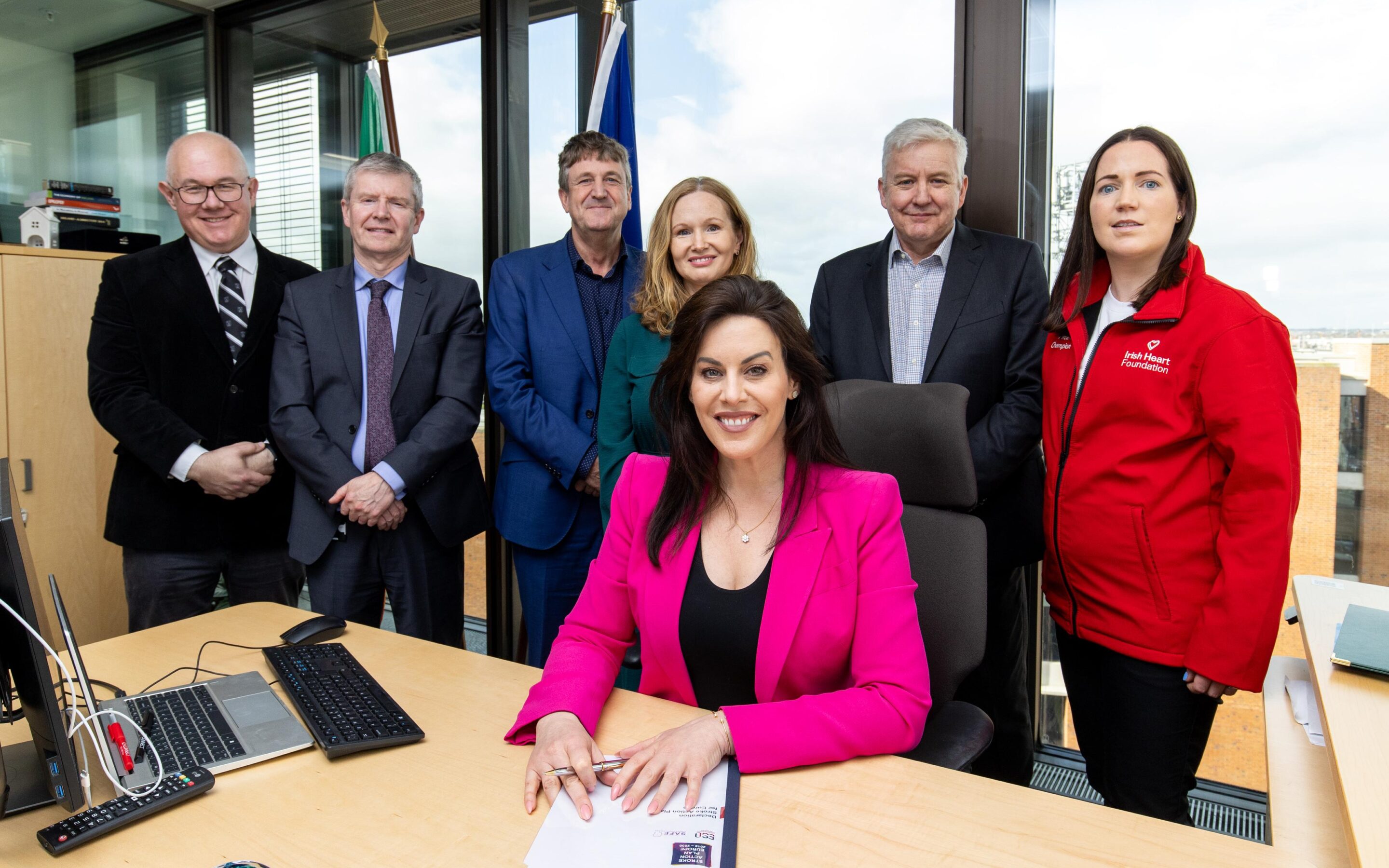
Ireland has become the 16th country to endorse the Stroke Action Plan for Europe (SAP-E) Declaration, marking a significant step forward in strengthening stroke research, prevention, care and support in the country.
By signing the Declaration, the Irish government formally recognises stroke as a leading cause of premature death and long-term disability. The commitment aligns Ireland with European and global efforts to reduce the burden of stroke
Minister for Health, Jennifer Carroll MacNeill, confirmed the signing and announced plans to develop a new National Stroke Strategy. The strategy will be shaped in consultation with patients, clinicians, researchers and policymakers, and will align closely with SAP-E priorities.
The recently updated SAP-E sets out ambitious targets for 2030, including reducing stroke incidence, improving access to specialist stroke care, and strengthening rehabilitation and long-term support, and research priorities.
Clinical and patient advocacy leaders, including our member the Irish Heart Foundation, have described the signing as a “major milestone,” highlighting its potential to reduce death and disability while improving quality of life for those affected by stroke.
Read more
Irish Heart Foundation
Press release from Irish Department of Health
Stroke Action Plan for Europe
Mar 24, 2026
At ESOC 2026, a dedicated programme for Nurses and AHPs will explore the latest evidence, practical challenges, and patient-centred approaches shaping modern stroke care. From rehabilitation science to holistic recovery, the programme is designed to support your daily practice and professional development.
Highlights include:
- Beyond the Obvious: Integrating Under-recognised Challenges into Holistic Stroke Recovery
- Trial Design in Rehabilitation – Challenges and Solutions
- Thriving After Stroke: Evidence, Experience, and Empowerment
- Rehabilitation and Recovery Treatment Advances
- Beyond the Acute Event: Mechanisms and Management of Post-Stroke Complications
Join a multidisciplinary community committed to improving outcomes across the stroke pathway – from early recovery to long-term care.
Click for more information
Mar 20, 2026
The European RES-Q+ research project aims to improve stroke care by combining the global RES-Q registry, an international database tracking stroke care to improve treatment quality, with digital tools and artificial intelligence.
As part of this work, stroke survivors and clinicians have co-developed a virtual assistant (VA) to support survivors after they leave hospital.
The VA will help them track important health issues (such as blood pressure), track what medicine to take when, store key documents and invite users to complete short questionnaires while providing summaries to healthcare professionals to support smoother and more joined up hospital checkups.
By strengthening the connection between hospital care and home recovery, the VA aims to improve the care, support and long-term outcomes for stroke survivors.
Arlene Wilkie, Director General of SAFE, says:
“Stroke recovery does not end when a stroke survivor leaves hospital. By connecting home recovery with hospital checkups, the virtual assistant helps ensure that no important details or changes are missed. This is an important step towards more personalised and joined up stroke care.”
For more information
- Click to visit the RES-Q+ website: https://www.resqplus.eu

RES-Q+ has received funding from the European Union under grant agreement No 101057603.
Mar 19, 2026
The EU Horizon funded research project, VALIDATE, aims to make sure AI can safely support doctors treating people with stroke.
When a patient arrives at hospital with a stroke, doctors must decide quickly which treatment will give the best chance of recovery. But predicting recovery can be challenging because every stroke and every patient is different.
VALIDATE is developing AI tools that analyse medical data to help doctors estimate how a patient might recover to support effective treatment decisions. Alongside this, the project will make sure these AI tools are fair, safe and carefully tested before being used in everyday care.
“We need to make treatment decisions very quickly when someone has a stroke,” said Dr Marta Rubiero, stroke neurologist and clinical validation lead in the project. “Clinical research is how we learn which treatments work best and make sure new tools really help patients.”
The project tests AI systems using diverse patient data and involves doctors, researchers and patient representatives throughout the process. Strict European safety and ethical standards are followed to prevent errors and bias.
Arlene Wilkie, Director General of the Stroke Alliance for Europe (SAFE), said: “Research participation is essential to improving stroke care. VALIDATE shows how working together can lead to trustworthy innovations that benefit patients and families.”
Researchers hope the project will help make stroke treatment more personalised and improve recovery for patients across Europe.
For more information, click to view video
Or visit the Validate website: https://validate-project.eu

The VALIDATE project receives funding from the European Commission’s Horizon Europe Programme under grant agreement number 101057263.

Mar 18, 2026
On Brain Awareness Week’s third day we are focusing on UMBRELLA, a European research project that uses artificial intelligence (AI) and digital tools to improve how strokes are diagnosed, treated and managed.
A stroke occurs when blood flow to the brain is blocked or a blood vessel bursts. Quick treatment is vital, but recovery can be long and complex and many survivors remain at risk of another stroke.
UMBRELLA aims to support doctors by using AI to help them make faster and more personalised decisions, while keeping patient information safe and private.
The project follows a careful process: health data is securely collected, organised and analysed inside hospitals. Personal details are removed, and strict privacy rules are followed. The AI is then trained to recognise patterns and tested to make sure it works safely and truly helps patient care.
Led by Vall d’Hebron Research Institute and Siemens Healthineers, and supported by the EU’s Innovative Health Initiative, the project brings together hospitals, researchers, patient organisations and companies from across Europe.
“Stroke survivors live with many long-term challenges. Better tools to support them are urgently needed. UMBRELLA is an exciting step toward more personalised and effective stroke care, with the potential to make a real difference for patients and families across Europe,” said Arlene Wilkie, Director General of SAFE.
By improving diagnosis, treatment and prevention, UMBRELLA aims to transform stroke care and improve the quality of lives of thousands of people.
To learn more about the project:
Visit the Umbrella website https://umbrella-ihi.eu
Or contact research@safestroke.eu
This project is supported by the Innovative Health Initiative Joint Undertaking (IHI JU) under grant agreement No 101172825. The JU receives support from the European Union’s Horizon Europe research and innovation programme and COCIR, EFPIA, Europa Bío, MedTech Europe and Vaccines Europe.
Page 1 of 7312345...102030...»Last »