Sep 11, 2019
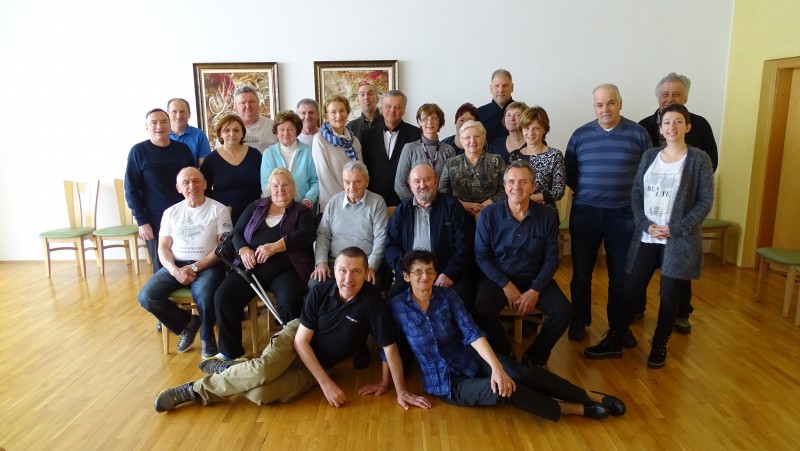
SAFE is delighted to share the news of Stroke Society of Slovenia being awarded with the World Stroke Award in the High-Income Country category.
World Stroke Awards are given to organisations and individuals who have demonstrated high levels of commitment and creativity in support of the objectives and messages of the World Stroke Campaign.
 The Campaign Working Group and Committee selected the Stroke Society of Slovenia, for an award based on their impressive outreach programme and development of local partnerships that will do much to raise awareness of stroke and to build an understanding of the challenges of stroke survivors.
The Committee were impressed by the reach of Slovenian campaign, and strategic engagement of faith based organizations and media that will help to support future advocacy and public awareness campaigns in Slovenia.

Sep 6, 2019
First published on SienceDaily
Breastfeeding is not only good for babies, there is growing evidence it may also reduce the risk for stroke in post-menopausal women who reported breastfeeding at least one child, according to new research in Journal of the American Heart Association, the Open Access Journal of the American Heart Association/American Stroke Association.
Stroke is the fourth leading cause of death among women aged 65 and older, and is the third leading cause of death among Hispanic and black women aged 65 and older, according to the study.
“Some studies have reported that breastfeeding may reduce the rates of breast cancer, ovarian cancer and risk of developing Type 2 diabetes in mothers. Recent findings point to the benefits of breastfeeding on heart disease and other specific cardiovascular risk factors,” said Lisette T. Jacobson, Ph.D., M.P.A., M.A., lead author of the study and assistant professor in the department of preventive medicine and public health at the University of Kansas School of Medicine-Wichita.
This is among the first studies to examine breastfeeding and a possible relationship to stroke risk for mothers, as well as how such a relationship might vary by ethnicity.
Researchers analyzed data on 80,191 participants in the Women’s Health Initiative observational study, a large ongoing national study that has tracked the medical events and health habits of postmenopausal women who were recruited between 1993 and 1998. All women in this analysis had delivered one or more children and 58 percent reported ever having breastfed. Among these women, 51 percent breastfed for one-six months, 22 percent for seven-12 months and 27 percent for 13 or more months. At the time of recruitment, the average age was 63.7 years and the follow-up period was 12.6 years.
After adjusting for non-modifiable stroke risk factors (such as age and family history), researchers found stroke risk among women who breastfed their babies was on average:
23 percent lower in all women,
48 percent lower in black women,
32 percent lower in Hispanic women,
21 percent lower in white women, and
19 percent lower in women who had breastfed for up to six months.
A longer reported length of breastfeeding was associated with a greater reduction in risk.
You can read the full article here.

Sep 5, 2019
Did you know that sitting for long periods of time increases your risk of heart disease and stroke?
It is recommended that we get 30 minutes of moderate intensity activity at least five days a week. However, this does not cancel out the damage caused to our health by sitting for long periods of time.
 A recent survey by the Irish Heart Foundation revealed that the average person in Ireland sits down for 7.3 hours a day. The Irish Heart Foundation will run the campaign ‘Escape your Chair’ throughout the month of September. The campaign aims to inform and advise about the dangers of sitting too much and provide useful resources to help reduce your sitting time by making your working day, commute and leisure time more active.
Helping you Escape Your Chair and move more, the campaign also aims to reduce your risk of heart disease and stroke.
To learn more about this campaign, please visit www.irishheart.ie.

Sep 3, 2019
First published on ScienceDaily.com
Ever wondered what was going on in the brain of John Coltrane when he played the famous solo on his album Giant Steps? Researchers at the National Institute of Information and Communications Technology (NICT), Japan, and Western University, Canada, have succeeded in visualizing how information is represented in a widespread area in the human cerebral cortex during a performance of skilled finger movement sequences.
Contrary to the common assumption, the researchers found that overlapping regions in the premotor and parietal cortices represent the sequences in multiple levels of motor hierarchy (e.g., chunks of a few finger movements, or chunks of a few chunks), whereas the individual finger movements (i.e., the lowest level in the hierarchy) were uniquely represented in the primary motor cortex. These results uncovered the first detailed map of cortical sequence representation in the human brain. The results may also provide some clue for locating new candidate brain areas as signal sources for motor BCI application or developing more sophisticated algorithm to reconstruct complex motor behavior.
The results were published online as Yokoi and Diedrichsen “Neural Organization of Hierarchical Motor Sequence Representations in the Human Neocortex” in Neuron on July 22, 2019.
Achievements
The best way to remember/produce long and complex motor sequences is to divide them into several smaller pieces recursively. For example, a musical piece may be remembered as a sequence of smaller chunks, with each chunk representing a group of often co-occurring notes. Such hierarchical organization has long been thought to underlie our control of motor sequences from the highly skillful actions, like playing music, to daily behavior, like making a cup of tea. Yet, very little is known about how these hierarchies are implemented in our brain.
In a new study published in a journal Neuron, Atsushi Yokoi, Center for Information and Neural Networks (CiNet), NICT, and Jörn Diedrichsen, Brain and Mind Institute, Western Univ., provide the first direct evidence of how hierarchically organized sequences are represented through the population activity across the human cerebral cortex.
You can read the full article here.
Aug 30, 2019
Each stroke survivors’ journey is a different story. The terrible and terrifying experience changes lives forever, but sometimes people choose to focus on positive things and look forward, redefining their views on life and establishing to so called “new normal”. One of these remarkable people, David Festenstein from the UK, shared with us his life story and how his stroke journey led to a recovery programme called “7 steps to recovery“.
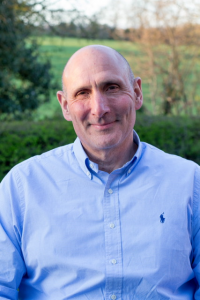 SAFE: How old were you and how did you feel when stroke happened to you?
DF: I was 54 years old, that’s 11 years ago, I can not believe it was such a long time ago as it is always vivid in my mind when I think about it. At the time I could not understand why it happened to me as I lived such a healthy life style. I swam most days. I was going to weight-watchers and almost at my ideal body weight. I was also a non-smoker, a moderate drinker, my blood pressure was normal and there was no history of stroke in our family.
On the day of the stroke, I was very frightened I remember shaking in the bay of the stroke ward wondering what would become of me. Would I ever walk again, work again? To go from being able bodied to loosing half the movement in my body, I became numb with the uncertainty. At first I had been told that they thought I had had a stroke as a result of a blood clot and that they would be able to carry out the procedure of thrombolysis (a clot busting drug) that would allow the movement to slowly come back. So I began to run a film of getting better, but this was not to be as they discovered after a scan that it was a bleed and so they could not carry it out. They had said they would have to admit me to the stroke ward and “take it from there” so at this point I felt really terrible, hence the feelings described above.
SAFE: How did the ‘7 steps to recovery’ idea emerged?
DF: The “ 7 steps to recovery” originated from the diary and journal which I kept during my stay in hospital. The idea of the diary was to maintain my focus on gratitude, ie what I still had rather than what I had lost. At the same time holding a vision of being a better man back with my wife and children living a normal life again.
I would log the day’s events, highlighting what went well, what worked, what did not work and any overall learning. Also it gave me the opportunity to vent my frustration when I had really difficult days.
The journal allowed me to record any additional learning or observations, especially when I was learning to walk again.
My consultant was fascinated by how I applied my coaching and communication background to my recovery. He said that he thought I was one of the best recoveries he had ever seen. He thought they could learn a lot from my recovery. Firstly how my strategies could be applied to less resourceful patients than myself and secondly how they as health professionals could reflect on what they could do differently to improve the stroke recovery process overall. As a result he invited me to come back to present to the medical team when I was better.
In April 2009 and I went back to the stroke ward and presented to my consultant Dr David Collas and his medical team. In consolidating my notes I discovered there were seven distinct steps that I had taken to support my recovery. They were very excited as they could see the potential for these steps to be applied not only to stroke recovery but in fact any severe health set back.
Finally these videos are the videos that were developed in association with Oxford Brookes University for the content for the 7 Steps recovery app in 2014/15.
SAFE: How difficult was it for you to get back to your regular life after stroke, considering that you were one of the ‘lucky ones’- your recovery was remarkable, you live in the 1st world country where you can get the maximum care etc.?
DF: Although I had mobility and I could walk, I could not walk any significant distances without getting very tired. Also the way in which I was walking was far from right so I fought hard to get further physiotherapy because as far I was concerned, there was much more improvement needed. However in contrast the Physiotherapist who was treating me said “I had reached a plateau and that was a good as it gets”
I refused to accept this and as the number of sessions had run out and they would not give me any more, I engaged the Neuro physiotherapist who had treated me in hospital and the quality of my walking improved dramatically.
She had discovered that the former Physiotherapist was giving me “strengthening exercises” rather than “Neuro ones”, so no wonder I was not improving very much and reaching “this plateau”.
The other difficulty that I suffered for a long time was getting tired easily, i.e. fatigue. Furthermore as a result of having my stoke I had lost the work I had before the stroke. As I work for myself I had to start prospecting for work from scratch again and did not start working properly until April of 2009.
SAFE: In conclusion, what would be your one take away message that summarises your seven steps as you describe them in your Youtube videos?
DF: The one take away message would be that summarises the 7 steps is that at some level you can take control with your mind and begin to set the intent for your recovery and then create a vision for your life after your stroke.