Mar 17, 2026
EAST-STROKE is a European study that is exploring whether treating an irregular heartbeat earlier after a stroke could help prevent second strokes.
Atrial fibrillation (AF), a condition where the heart beats unevenly and sometimes too fast. This can lead to blood clots forming in the heart, which in turn may travel to the brain and cause stroke. Doctors usually treat these patients with blood-thinning medicines and drugs to slow the heart rate down.
EAST-STROKE will test whether adding an additional treatment to restore a normal heart rhythm, (rhythm control) soon after a stroke can further reduce the risk of future strokes and heart problems.
Rhythm control may include additional medications or a procedure called ablation, where doctors carefully treat small areas of heart tissue that are causing the irregular rhythm. The goal with this treatment would be to help the heart beat normally again.
Many stroke survivors are left with long-term disabilities following a stroke. For those who also have atrial fibrillation (AF), the risk of having another stroke is high.
“Life after stroke can be a long and difficult journey. By treating the heart rhythm problem early, we hope to reduce the risk of further strokes and help stroke survivors avoid more complications that affect their daily lives.” said Dr Märit Jensen, Neurologist at University Medical Center Hamburg-Eppendorf.
The study will include 1,746 patients in multiple countries and is funded by the European Union.
Arlene Wilkie, Director General of the Stroke Alliance for Europe (SAFE), said: “If this treatment approach proves safe and effective, it would change how we care for stroke patients with atrial fibrillation and could help prevent many future strokes.”
If successful, the EAST-STROKE trial could lead to a major shift in stroke treatment, helping thousands of patients worldwide avoid recurrent strokes and heart complications.
For more information, see video: https://youtu.be/JM7wKqkCEYk
Or visit the EAST-STROKE website: https://east-stroke.eu

The project has received funding from the European Union’s Horizon 2020 research and innovation programme under grant agreement number 101156541
Mar 16, 2026
When someone has a stroke, every minute counts. Quick and accurate diagnosis is critical to ensure patients receive the right treatment as soon as possible.
The POC4Triage project brings together hospitals, researchers and patient organisations across Europe to test four portable devices in real emergency settings, from ambulances to hospital emergency departments. By running the study in multiple countries, researchers can see how these tools perform in different healthcare systems and diverse groups of patients.
At Amsterdam UMC (Netherlands) and Vall d’Hebron Hospital (Spain), researchers are evaluating two brain-monitoring devices:
- A lightweight electroencephaloeraphy (EEG) patch placed just below the hairline to measure brain activity
- A functional near-infrared spectroscopy (fNIRS) device that uses harmless light to monitor blood flow in the brain
The devices are tested in stages, first with healthy volunteers, then in emergency departments and finally in ambulances. This stepwise approach allows teams to improve the technology before it is used in urgent care.
Patients who take part may not benefit directly during their own emergency, but their involvement is vital. By contributing to research, they help doctors understand how to recognise stroke earlier and diagnose more accurately. In the future, this could lead to faster treatment and better recovery for stroke patients across Europe.
Arlene Wilkie, Director General at Stroke Alliance for Europe says:
“POC4Triage shows how research in real emergency settings can lead to devices that improve stroke care. Time is brain, every improvement in speed and accuracy has the potential to save lives, reduce disability and quality of life for survivors in the future.”
For more information

POC4Triage has received funding from the European Union under grant agreement No 101137358.

Jan 30, 2026
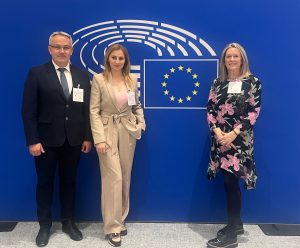
SAFE was pleased to attend the launch of the new MEP Cardiovascular Health Group at the European Parliament in Brussels. Chaired by MEP Romana Jerković (S&D, Croatia), the group met with around 50 delegates from the European Alliance for Cardiovascular Health to discuss the year’s work programme and to mark the launch of a new publication by the Alliance: “A European Cardiovascular Health Plan: The Roadmap.”
Representing SAFE at the event were Arlene Wilkie, our Director General, alongside Liliana Curea from ALIA, Romania, and Adam Siger from Fundacja Udaru Mózgu, Poland. The formation of this dedicated group within the European Parliament represents a significant step forward in driving coordinated EU action to improve cardiovascular health outcomes across member states.
Read more
Jan 30, 2026
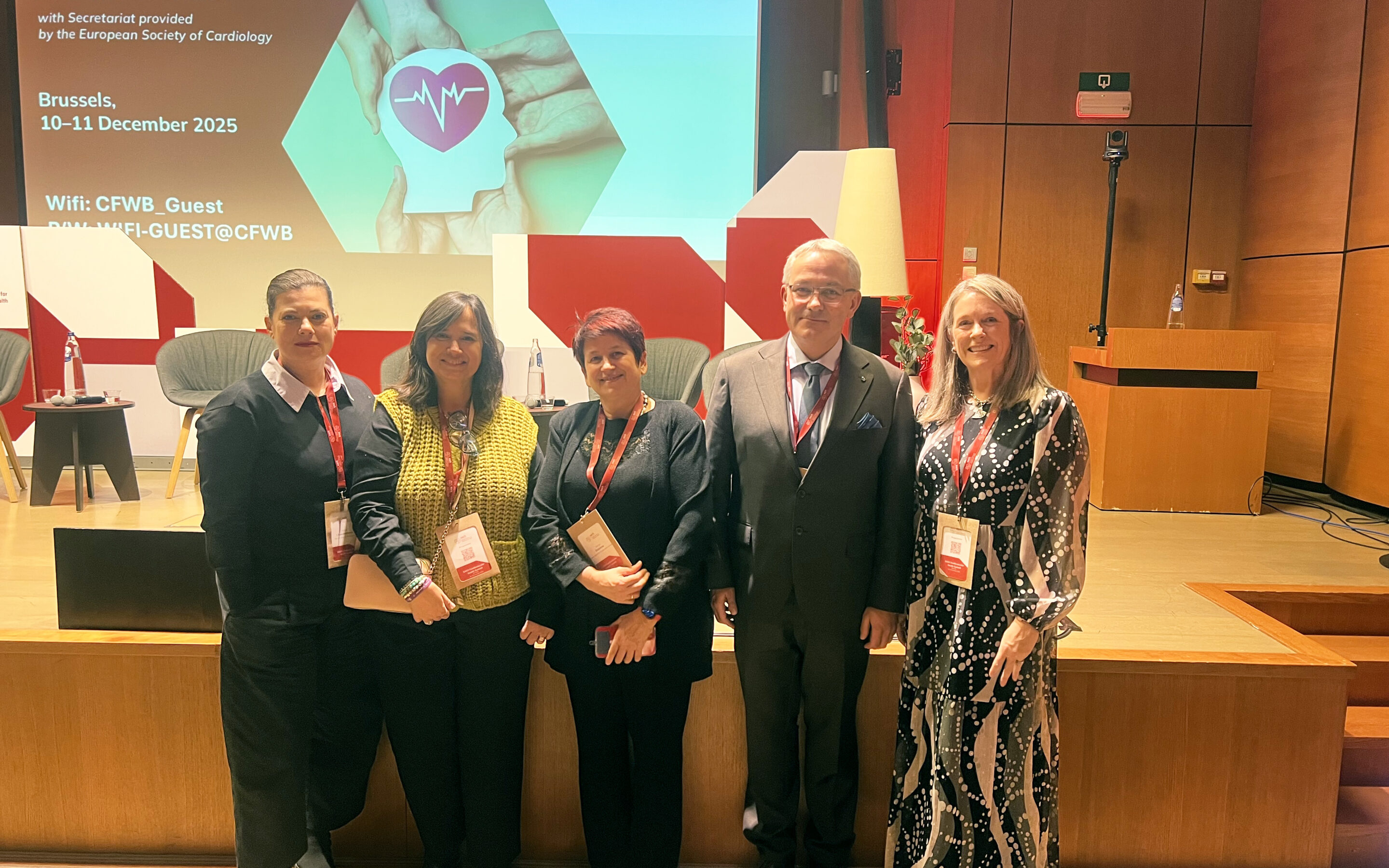
The EACH Cardiovascular Health Summit 2025 in Brussels brought together policymakers, clinicians, researchers and patient advocates to address Europe’s biggest health challenge: cardiovascular disease.
The event focused on tackling inequalities, improving prevention and early detection, and strengthening patient‑centred care across Europe. A major highlight was the official launch of the EU Cardiovascular Health Plan by the European Health Commissioner, marking a historic step forward for cardiovascular health across the EU.
SAFE was represented by Arlene Wilkie, alongside SAFE members Marina Charalambous (Cyprus), Diana Wong-Ramos (Portugal), Adam Siger (Poland) and Dorina Dobreva (Bulgaria). Arlene participated in a high‑level panel discussion where she welcomed the new Plan but urged the community to ensure that stroke is not left behind, emphasising the need for integrated action across all cardiovascular conditions. Diana also took part in a panel discussion where she highlighted the importance of reducing inequalities across Europe and stressed how coordinated EU‑level action can help close persistent gaps in cardiovascular outcomes.
Jan 19, 2026
The updated Stroke Action Plan for Europe has been published in the European Stroke Journal, urging European governments to act now by implementing and funding comprehensive national stroke strategies in line with its recommendations.
This call for decisive action is reinforced by the recent OECD report ‘The State of Cardiovascular Health in the European Union’, which identifies stroke as the second leading cause of death from cardiovascular disease and a major contributor of acquired long-term disability.
Developed by the European Stroke Organisation and the Stroke Alliance for Europe, the Stroke Action Plan for Europe sets a clear roadmap for reducing the burden of stroke across Europe by 2030.
Building on progress made since the first Stroke Action Plan for Europe was launched in 2018, the revised document highlights both achievements and persistent gaps in care – particularly around prevention, emergency response, rehabilitation and life after stroke.
“The Stroke Action Plan for Europe is a wake-up call,” said Professor Simona Sacco, President, European Stroke Organisation. “We know what works, and the nations of Europe now have an evidence-based blueprint for delivering high-quality stroke care. But without the political will and investment to implement national stroke strategies, too many people will continue to experience preventable deaths and life-changing disability.”
The Stroke Action Plan for Europe is supported by the latest findings from the 2023 Stroke Services Tracker, which gathers data from 47 countries. While some countries have made significant progress since 2018 – including an increase in the number of national stroke plans – the data also reveal stark inequalities in, for example, access to acute treatments like thrombectomy, as well as long-term support for survivors.
- Only seven countries managed to achieve the recommended ‘door-to-groin’ time – the time from arrival in hospital to starting thrombectomy – of 60 minutes or less. In 12 countries, this delay was over 90 minutes, reducing the chances of a good recovery.
- Only 13 countries report having a dedicated programme for life after stroke and structured follow-up care remains rare, despite clear evidence of its importance for recovery and quality of life.
“Stroke is not only a medical emergency, it is a lifelong condition that demands a joined-up response,” said Professor Hariklia Proios, President, Stroke Alliance for Europe. “Stroke is the second leading cause of death from cardiovascular disease and a major contributor of acquired long-term disability. The Stroke Action Plan for Europe gives governments and health systems a clear path to improve outcomes. Action on stroke must start now.”
The Stroke Action Plan for Europe outlines clear targets in seven domains: primary prevention, organisation of stroke services, management of acute stroke, secondary prevention, rehabilitation, evaluation of outcomes and life after stroke. It also provides measurable benchmarks that countries can use to monitor progress.
“A stroke changes your life instantly. What happens next depends on the systems built around us on community and country-level. The Stroke Action Plan for Europe is a crucial step toward ensuring that survivors across Europe receive the care and dignity they deserve.” says Associate Professor Melinda B. Roaldsen, medical doctor and stroke scientist with lived experience.
SAFE and ESO are calling on national policymakers to work in partnership with people with lived experience, health professionals and stroke support organisations to implement the SAP-E and ensure equitable care for all.
About the Stroke Action Plan for Europe and the Stroke Service Tracker
The Stroke Action Plan for Europe (SAP-E), launched in 2018, provides a strategic blueprint to improve stroke prevention, care and life after stroke support by 2030. In addition, the Plan directly supports the objectives of the newly published EU Cardiovascular Health Plan, which calls for stronger prevention, earlier intervention and more coordinated action across cardiovascular disease, including stroke.
The Stroke Service Tracker (SST) was developed as a monitoring tool to evaluate Europe’s progress against the SAP-E targets, providing valuable insights for national stakeholders to drive improvements.
As reported in the recent 2025 OECD report ‘The State of Cardiovascular Health in the European Union’, stroke is the second leading cause of death from cardiovascular disease after ischaemic heart disease and a major contributor of acquired long-term disability.
Europe faces over 1.1 million strokes each year, causing nearly 460,000 deaths. Nearly 10 million people live with stroke’s long-term effects. The economic burden is immense – over a 20-year period to 2040, the costs are projected to rise from €60 billion to €86 billion by 2040 without urgent reform.
The SST continues to be a vital instrument for mapping progress and exposing areas where countries fall short. It is a call for action, innovation and investment to ensure every stroke survivor in Europe has access to high-quality, timely and equitable care – no matter where they live.