Jul 30, 2019
The celebrations of the 25th anniversary of the German Stroke Foundation officially ended on its birthday on January 29th 2019. Of course the work on many projects and events continues. Here are some examples.
New Case Manager for children with stroke
 The second “Case manager for children with stroke” (Schlaganfall-Kinderlotsin) was installed at the beginning of the year. Franziska Schroll works at the Schön Clinic in Vogtareuth (Bavaria) and will support families with stroke-affected children in southern Germany. The foundation “RTL – We help children” finances the project for two years.
The case manager provides information about stroke and helps families to get all the treatments, therapies and social support they need. The other case manager, Marco Vollers, continues his work in Bremen and is responsible for the northern part of Germany.
Seminar for parents
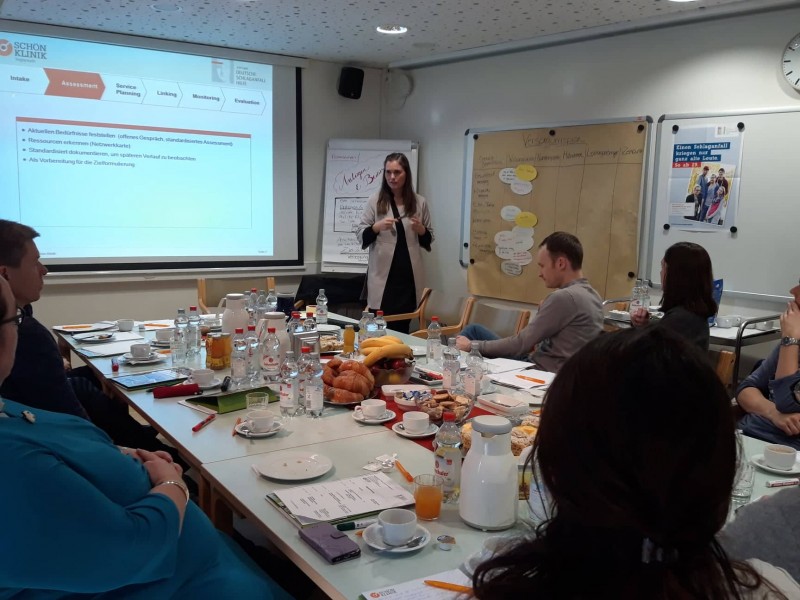
When a child has a stroke, the parents have many questions. Which therapy is best? Which lasting consequences will the stroke have? Will my child need special support at kindergarden or at school? How will the family cope with the difficult situation? Experts answered these questions at a seminar for parents. Parents had the chance to get general information about stroke and discuss their individual situation with doctors and therapists.
Stroke-scan “in jail”
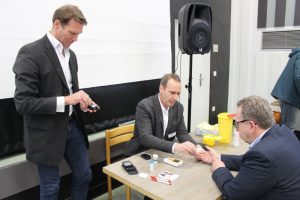
Many people have high blood pressure or diabetes and don’t know about it. This is why the German Stroke Foundation offers to scan the risk of stroke at work. At the beginning of the year the testing took place in a very special location: in jail.
Jail-employees had the chance to test their risk of stroke and discuss stroke prevention. Alexander Leipold, former professional wrestler and ambassador of the foundation, talked about his rehabilitation and motivation after the strokes.
Workshop for leaders of self support groups
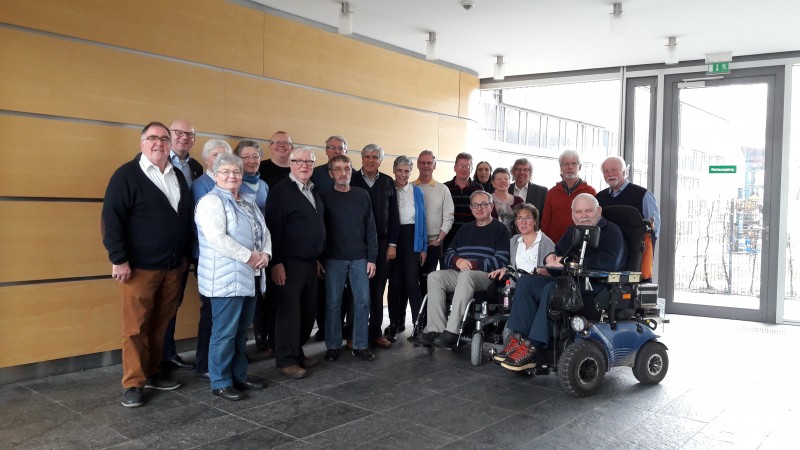
The foundation offers workshops for leaders and spokespersons of self support groups. In 2019 they took place in Hamburg, Halle and Zwickau. The participants learn for example about new laws, how to finance their group, how to use social media and discuss many questions. The workshops help them to be up to date and pass important information on to the other group members.
Case Management Symposium
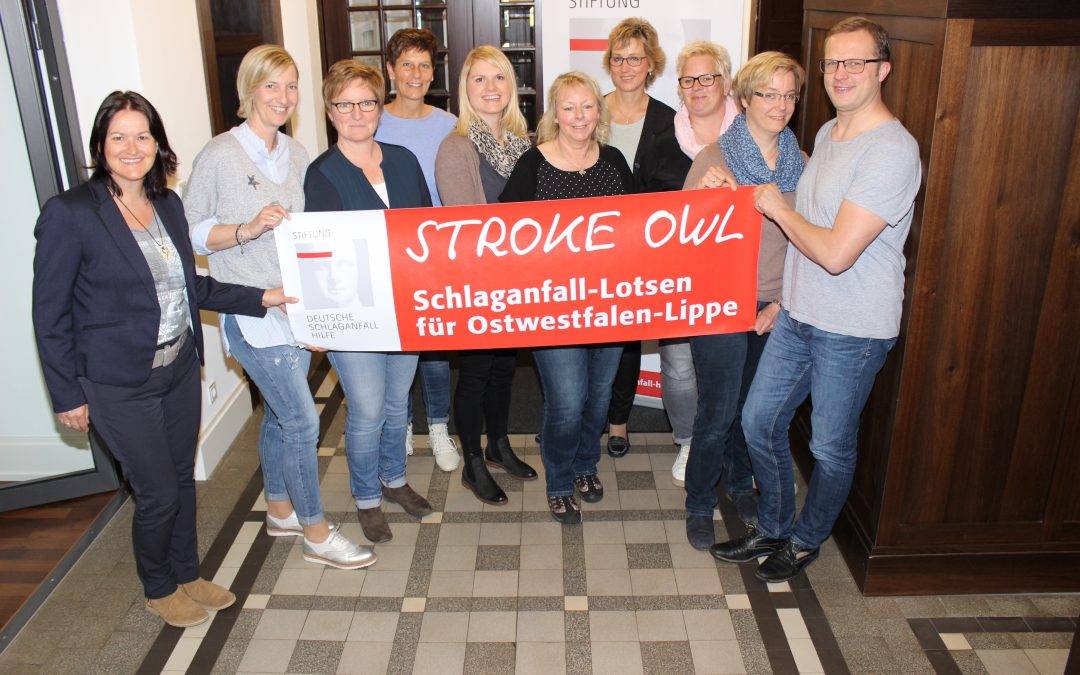
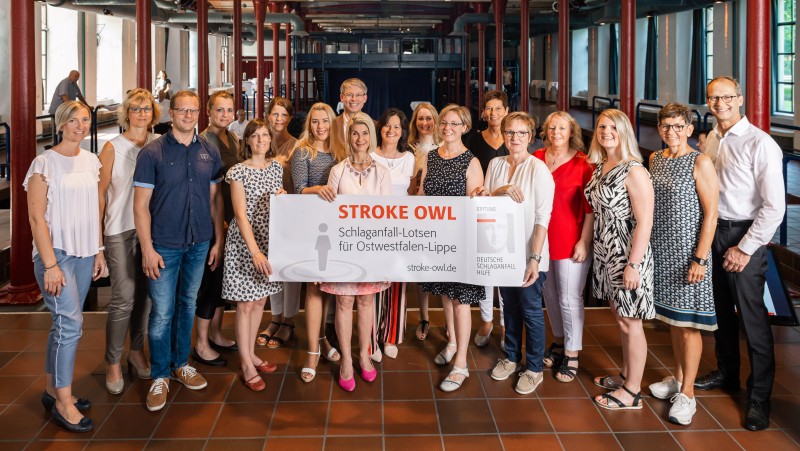
The project “STROKE OWL” is continuing successfully. Professional case managers support stroke survivors in the region Ostwestfalen-Lippe (OWL = East part of Westphalia covering 2 million inhabitants) for one year.
With this project the foundation wants to proof that a close support after the stroke can improve the quality of life of stroke patients and reduce the risk of further strokes. 1,5 years into the project the foundation organised a symposium for case management experts to discuss the outcomes and challenges to date.
Stroke in daily soap
“Unter uns”, a popular German daily soap on RTL-television, picked up stroke as a topic in the storyline. One of the main characters gets a stroke and suffers from paralysation and aphasia afterwards. The foundation supported and advised the crew. Actors visited the foundation and spoke to stroke patients to prepare for their roles and employees of the foundation gave advice on the script.
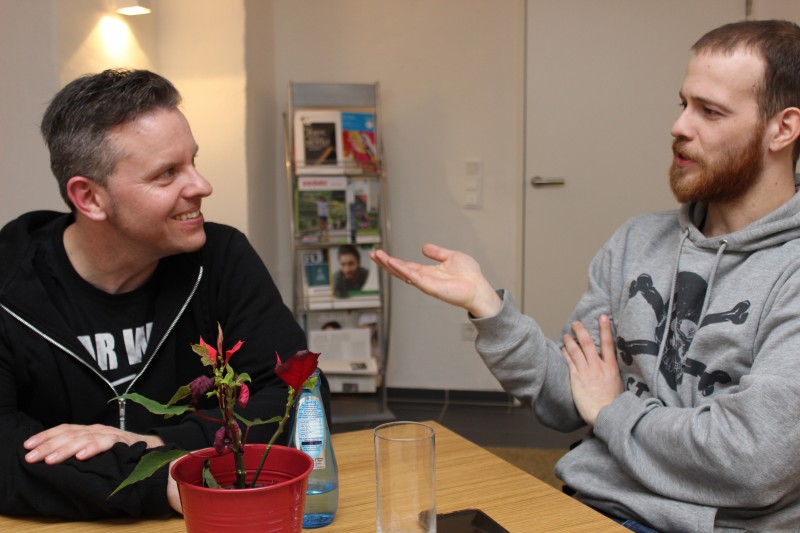
Photo: Stroke survivor Sascha Stachorra (left) helps actor Patrick Müller to prepare for his role.
Volunteer stroke-helpers
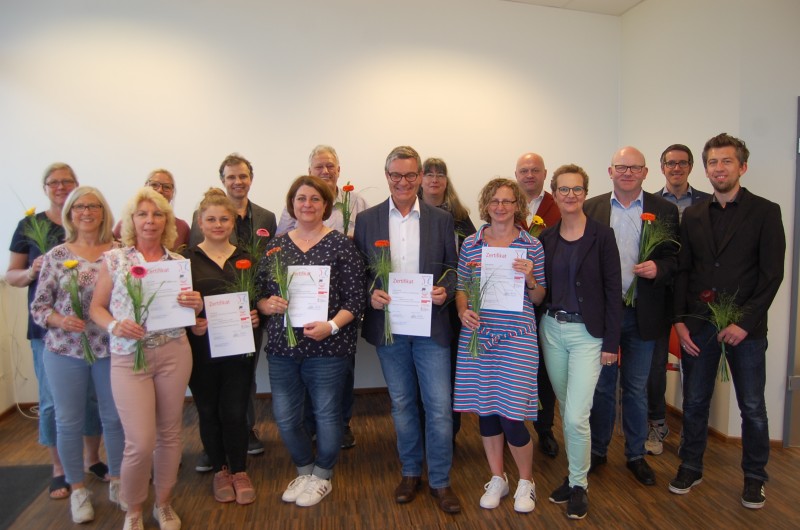
Volunteer stroke helpers support stroke survivors in their every day life. For example they get groceries together, accompany them for a walk or play board games. More and more people are interested in working as a volunteer in this field. This is why the foundation supports courses of instructions all over Germany. Local partners help organising the project, which is now offered in twelve regions.
Day against stroke
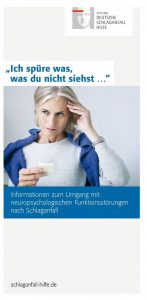 The national “Day against stroke” on May 10th is one of the most important days for communication about stroke related topics. The motto in 2019 “I feel something you can’t see…” is based on the German name of the child’s game “I spy with my little eye.”
Main goal was to focus on the unseen consequences of stroke like difficulties to recall information or to concentrate, neglect, visual field fail and emotional changes. Many newspapers, TV- and radio stations reported about the topic and it was successfully spread across social media. #Taggegendenschlaganfall (#dayagainststroke) made it into the top 10 hashtags on twitter in Germany for the first time.
Jan 11, 2019
The Stroke Alliance for Europe (SAFE), participates in EU funded research projects. Our involvement in research allows us to stay up-to-date on the latest research breakthroughs and promising treatments and to ensure that this potential live-saving knowledge reaches patients and healthcare professionals all across Europe. Our major strength is dissemination.
This video contains updates from five research projects that SAFE is actively involved in and these information have already been translated to Greek language by the Cyprus Stroke Organisation and the Hellenic Alliance/ Action for Stroke, to Slovakian by our member organisation Porazka.sk, the Croatian Stroke Society, with many other translations to come in the next couple of months.
Oct 29, 2018
This article was provided by World Stroke Organisation
Today on World Stroke Day, October 29th the World Stroke Organization, is calling for urgent action and investment to address the growing burden of stroke and circulatory diseases globally.
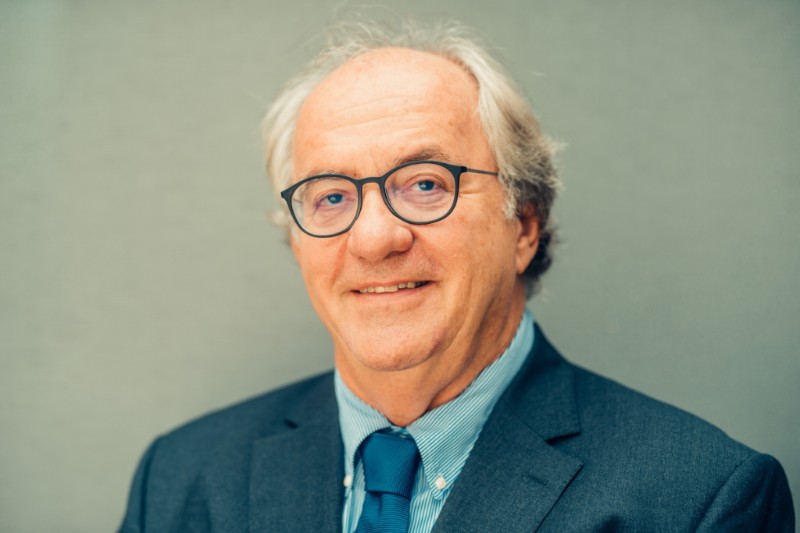
Prof Michail Brainin
Photo credit WSO
Highlighting the disappointing outcome of the recent UN High Level Meeting on Non-Communicable Diseases (NCDs) the WSO President, Prof Michael Brainin said, ‘We know that we 80% of strokes could be prevented by addressing a small number of risk factors, including hypertension, diet, smoking and lack of exercise. We also know that action on prevention would also contribute to a massive scale reduction in heart disease, cancer and diabetes.’
‘The impact of stroke on individuals, families and society as a whole is devastating. Stroke survivors can face significant impairment of movement, speech, cognition alongside debilitating psychological, social and financial problems.
‘With this knowledge, the current lack of political will and investment is cannot be easily comprehended, especially when you consider the cost of such inaction. While 5.5 million people die as a result of stroke each year, there are 80m stroke survivors in the world, many of whom live with some form of disability or impairment. While the costs to individuals is incalculable, the cost to society is astronomical.’
A recent policy document ‘Driving Sustainable Action for Circulatory Health’ published by the WSO and its partners in the Global Coalition for Circulatory Health, has calculated the global cost of circulatory diseases, including stroke, at US$957 Billion in 2015. On current projections this figure is set to rise to US$1044 Billion by 2030. The white paper sets out four key areas for action that, if enacted, would ensure delivery of global goals on disease reduction which are driving the rise in direct and indirect costs of NCDs. These include legislative interventions that:
1. Deliver policies and programmes to address tobacco, alcohol and unhealthy foods, promote clean air and deliver a built environment that fosters safe physical activity.
2. Ensure access to affordable, quality-assured essential medicines, delivered by adequately trained staff, including access to multi-therapy treatments.
3. Mobilise sufficient resources to combat non-communicable diseases including stroke. The taxation of unhealthy products such as alcohol, tobacco, unhealthy foods and non-alcoholic beverages (such as sugar-sweetened beverages) would generate revenues that could be directed to further prevention and control of circulatory diseases at global and national levels.
4. Put in place reliable, simple, and fit-for- purpose surveillance systems for monitoring the burden of stroke and the prevalence of NCD risk factors and treatment of stroke at national and global levels.
Prof Brainin concluded ‘At the recent UN High Level Meeting on NCDs in New York, governments delivered a weak response to a global crisis and agreed to wait 7 years before reviewing progress. In that time another 38.5 million people will die of stroke. We can’t wait until 2025 to calculate our losses, we need strong leadership and bold action to save lives now.’
Oct 5, 2018
As World Stroke Day 2018 approaches, we would like to invite you to register your event on the World Stroke Campaign website, by clicking on this button below.
Registration link WSD 2018
SAFE is proud of our member organisations who did tremendous work around World Stroke Day 2017, wholeheartedly supporting the “What’s your reason?” campaign. through use of texts, visuals and other material produced by WSO for this purpose.
We also used the opportunity to convey our own messages based on the Burden of Stroke in Europe Report findings, related to the lack of prevention and stroke awareness campaigns in Europe, as well as the underestimated danger coming from the three biggest stroke risk factors- blood pressure, AF and high cholesterol.
Whether it was a series of lectures like in Cyprus, Portugal, or a book promotion in Luxembourg or sports events that our colleagues from Ireland, Poland and many other countries organised- we showed that raising awareness of stroke was an important topic. Many of our organisations start the preparation for the World Stroke Day long before 29th October. For example, our colleagues from Slovenia started with activities dedicated to WSD as early as September by attending the Festival for the third age and with September’s national gathering, having a stand and giving a free lecture on how to beat stroke, delivered by the vice-president of the Slovenian Stroke Support Organisation, dr. Tatjana Erjavec.
What is your plan for this year? Register your event, put yourself on a map of stroke activists from around the world.
Oct 3, 2018
Cells and platelets stick inside arteries, increase risk after initial attack
The original article was first published on ScienceDaily.com
Doctors have long known that in the months after a heart attack or stroke, patients are more likely to have another attack or stroke. Now, a paper in the Journal of the American College of Cardiologyexplains what happens inside blood vessels to increase risk — and suggests a new way to treat it.
Heart attacks in mice caused inflammatory cells and platelets to more easily stick to the inner lining of arteries throughout the body — and particularly where there was already plaque, according to the paper. As a result, these sticky cells and platelets caused plaque to become unstable and contribute to blood clots that led to another heart attack or stroke.
But the study found treating mice that had experienced a heart attack or stroke with the powerful antioxidant apocynin cut plaque buildup in half and lowered inflammation to pre-attack levels.
“Knowing that newer forms of antioxidants such as apocynin can lower the risk of a second heart attack or stroke gives us a new treatment to explore and could one day help reduce heart attacks and strokes,” said the paper’s corresponding author, Jonathan R. Lindner, M.D., a professor of cardiovascular medicine at the OHSU School of Medicine.
Lindner penned the research paper with colleagues from OHSU, Scripps Research Institute and Bloodworks NW.
The researchers discovered the sticky cells and platelets by using unique forms of ultrasound imaging they developed to view molecules on the lining of blood vessels.
This research could help explain why the recent Canakinumab Anti-inflammatory Thrombosis Outcomes Study, also known as the CANTOS clinical trial, found an anti-inflammatory drug already approved to treat juvenile arthritis also reduced the risk of a second heart attack in trial participants by 15 percent.
Lindner and his colleagues are further studying how the relative stickiness of remote arteries affects the risks for additional heart attacks and strokes and are also evaluating new therapies beyond antioxidants.
The study was supported by the National Institutes of Health (R01-HL078610, R01-HL130046, R01-HL091153, R01-HL11763, HL42846, HL78784), NASA (grant 14-14NSBRI1-0025) and the Swiss National Science Foundation.
Story Source: Oregon Health & Science University. “Antioxidant reduces risk for second heart attack, stroke: Cells and platelets stick inside arteries, increase risk after initial attack.” ScienceDaily. ScienceDaily, 4 September 2018. <www.sciencedaily.com/releases/2018/09/180904164639.htm>.
Oct 18, 2016
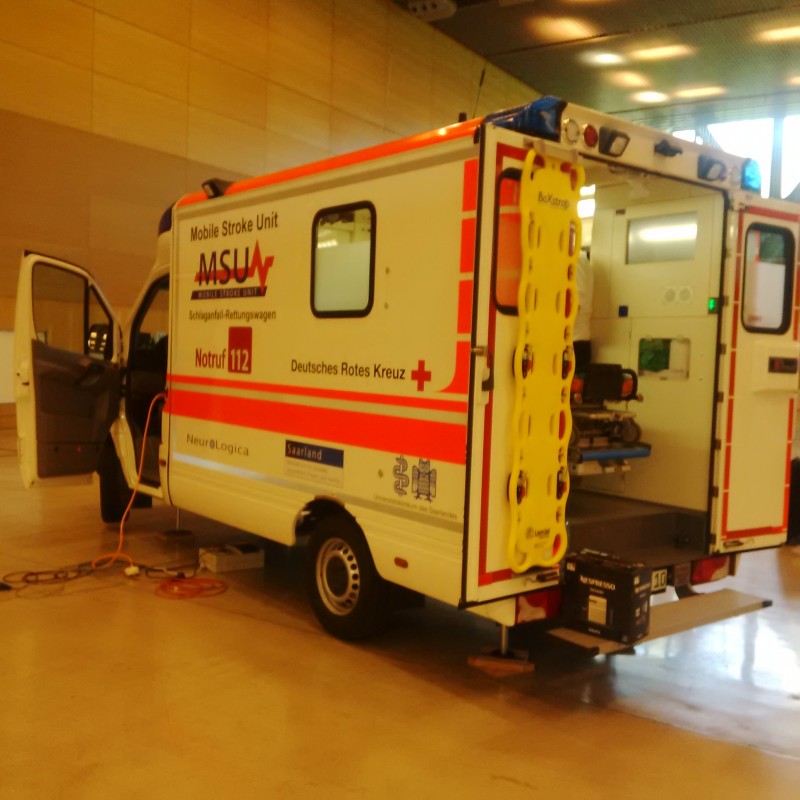
NewYork-Presbyterian launched an innovative mobile stroke treatment unit in collaboration with Weill Cornell Medicine, Columbia University Medical Center and the Fire Department of New York, according to a press release.
The mobile stroke treatment unit (MSTU) is an emergency vehicle deployed through 911 that is specially equipped to bring immediate care to patients who may be having a stroke. The team contains two paramedics, a CT technologist and a neurologist. The unit also contains all equipment and medications necessary to diagnosis and treat a stroke, according to the release. (more…)